

Choosing The Proper Hardware Root Of Trust
Root of Belief in cell gadgets poses a quantity of challenges, together with a larger threat of physical attacks, multiple semi-independent processors and interfaces, and power and house constraints. Convey Your Own System (BYOD) insurance policies pose further challenges in assuring that personally owned units comply with corporate insurance policies. Teleport is the AI Infrastructure Identity Firm, modernizing identification, entry, and coverage for infrastructure, improving engineering velocity and resiliency of critical infrastructure against human factors and/or compromise. NIST defines a hardware root of belief (HRoT) as “an inherently trusted combination of hardware and firmware that maintains the integrity of data.” This identified value is usually signed by the gadget manufacturer or a trusted authority.

Oracle Cloud Infrastructure Hardware Root Of Trust Features
The code or cryptographic keys stored inside the RoT can’t be altered or overwritten, even by administrative features or the operating system itself. This permanence is usually achieved by burning the code into Read-Only Reminiscence (ROM) or utilizing write-protected hardware fuses throughout manufacturing. Immutability ensures that even when malware positive aspects root entry to the operating system, it cannot modify the RoT to hide its presence or persist across reboots.
Cloud Studying
A Root of Trust (RoT) is a basic component—typically hardware-based—that an organization’s computer system or gadget inherently trusts. It serves because the unchangeable basis from which all subsequent security checks and selections are derived. The integrity of the complete computing stack, from firmware and working system to functions, is cryptographically verified in opposition to this secure root.
As A End Result Of the RoT is inherently trusted, it have to be isolated, protected, and immutable, making it probably the most crucial factor in establishing and sustaining system integrity and safe boot processes. A root of trust operates by way of a “chain of trust,” a hierarchical system in cybersecurity the place trust is established and handed down from a trusted “root” to intermediate entities, making certain authenticity. A chain of belief consists of a sequential cryptographic verification course of where each component in the boot sequence is authenticated by the previous, already trusted part earlier than execution. When completed, this chain establishes an unbroken chain of verified integrity from hardware power-on to working system load.
Oracle Cloud Free Tier
With all of these variations, it’s crucial that chip designers and safety architects study their unique safety and implementation needs earlier than choosing a Root of Trust. The following is only a brief listing of questions that engineers ought to think about earlier than selecting a Root of Belief. Secure Boot is binary — the firmware either passes verification or it doesn’t. Measured Boot creates an in depth log of every component that loaded, allowing a remote verifier to assess the precise configuration of the system. With more than 200,000 members, it’s designed to advertise peer-to-peer collaboration and sharing of best practices, product updates, and feedback.
The RoT includes https://link-building-service.info/simple-steps-to-maximize-a-websites-seo.html specialized hardware accelerators for performing fast, safe hashing, digital signing, and encryption. These accelerators enable the gadget to carry out complicated mathematical operations with out burdening the main CPU. They additionally be certain that cryptographic operations occur within a trusted setting, stopping sensitive information from being exposed in system memory.
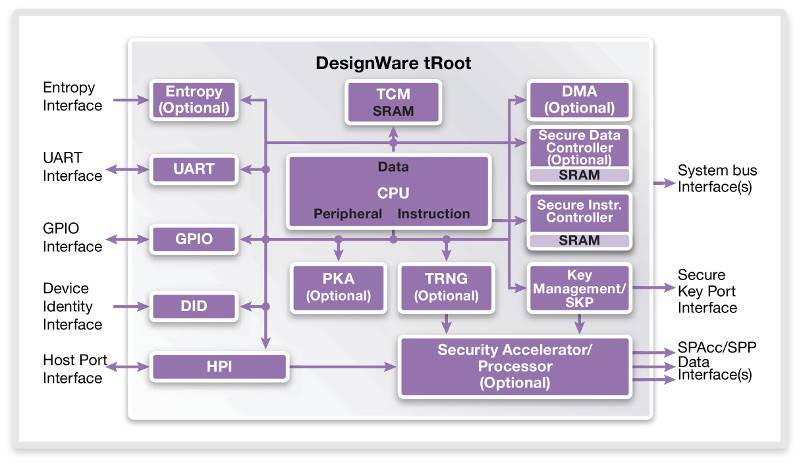
The RoT is physically and logically isolated from the main processor and memory, making it resilient to software attacks. Even if the principle operating system is totally compromised by a virus, the attacker can not access the isolated memory of the RoT. This separation is crucial for maintaining a restoration path and making certain that the reporting of the system’s state stays correct. If the hashes match, the RoT executes the verified element, passing belief to it. If the hashes don’t match, the RoT stops the boot course of, signaling a compromise.
- This is as a result of a software-based RoT resides in the identical memory house because the potential threats it is designed to detect, making it weak to the identical exploits that compromise the operating system.
- Platforms such as Hexnode can support organizations by serving to implement device safety posture, configuration insurance policies, and compliance requirements around trusted endpoints.
- Root of Trust is the inspiration of safety on which your computing system and linked cellular gadgets depend upon.
- If the boot course of detects tampering (violating the Chain of Trust), the TPM will refuse to launch the important thing, leaving the information on the onerous drive encrypted and inaccessible to the attacker.
Key Features And Elements
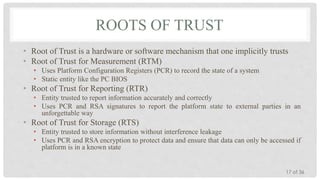
A software program root of trust (RoT) runs within the working system setting and depends on that environment’s safety. A hardware root of trust is physically isolated from the principle CPU and reminiscence, offering stronger safety in opposition to tampering. Utilizes safe measurement capabilities by way of root of belief for measurement (RTM) to cryptographically hash boot elements, verifying the entire boot chain’s integrity and reporting any deviations. The RoT supplies a novel, unforgeable hardware identification (attestation key) used to authenticate the system to community services. When a device connects to a community, it can cryptographically prove its identity and its integrity state, allowing the network to grant access solely to verified, healthy gadgets.
Every safe system needs an anchor — a component that is trusted unconditionally because everything else’s trustworthiness depends on it. It’s the first thing that executes when energy is applied, and its integrity determines whether or not something that follows could be believed. For secrets and techniques management, hardware-backed controls cut back the risk of exposing delicate keys, tokens, and credentials. Platforms similar to Hexnode can support organizations by serving to enforce device safety posture, configuration policies, and compliance requirements round trusted endpoints. Working the gamut from small, restricted security implementations to larger, excessive security anchors, the selection of a root of trust is best tied to the distinctive technical and enterprise wants of the chipmaker and its clients.
Sourcing the distinctive identifier (UID) and Hardware Distinctive Key (HUK) is a important utilization of an HRoT. The UID is used for gadget identification and communication with other system components. The HUK serves as the foundational cryptographic key used for deriving the other secret keys in a system. To greatest shield the UID/HUK in addition to other saved secrets in the HRoT, anti-tamper measures have to be adequately designed in both physical layout and digital RTL. In a secure system, the RoT performs related capabilities, provisioning and storing the cryptographic root key.